
Generator dependence has become a national operating model for households and businesses.
Making Power
See how Power Angel turns CNG into reliable business electricity.
The Power Angel platform combines gas conditioning, a Solid Oxide Fuel Cell stack, power electronics and battery storage. The result is continuous, weather-independent baseload power with battery ride-through and managed service accountability.
Interactive system animation
Full SOFC + battery power-system schematic.
Use the controls inside the schematic to see fuel conversion, electrical output, battery behaviour, heat recovery and customer demand in one connected system.
Why this matters
Nigeria needs power that works when the grid, fuel logistics or weather do not.
Power Angel is positioned for customers who need dependable baseload energy, not a patchwork of partial solutions.
SOFCs are not daylight-dependent and can run continuously when fuel is supplied.
SOFCs generate electricity through a chemical reaction rather than internal combustion.
A-DEUS wraps technology in monitoring, maintenance, fuel coordination and SLA reporting.
From molecules to outcomes
The Power Angel system is designed as one accountable energy platform.
Fuel becomes useful power through a controlled sequence: clean the gas, reform it, generate electricity in the SOFC stack, condition the output, then use the battery to smooth demand and protect loads.
Conditioned CNG
Gas is prepared for stable fuel-cell operation, helping protect the stack and service quality.
SOFC stack
The fuel cell converts chemical energy directly to electricity and heat through electrochemical reactions.
Power electronics
Inverter controls deliver usable AC power and maintain power quality for critical equipment.
Battery storage
Battery ride-through supports peaks, transients and seamless service during operating changes.
Commercial Showcase Abuja
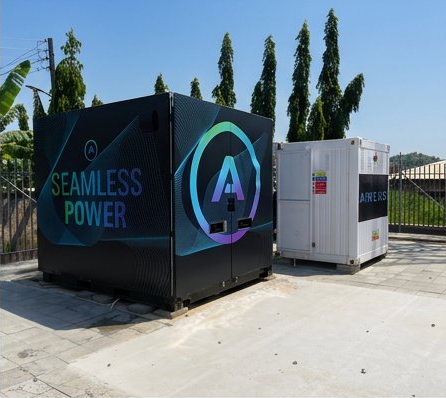
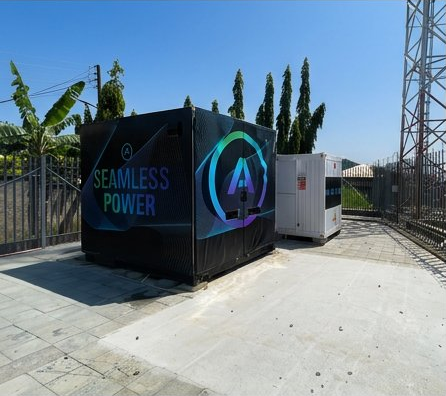
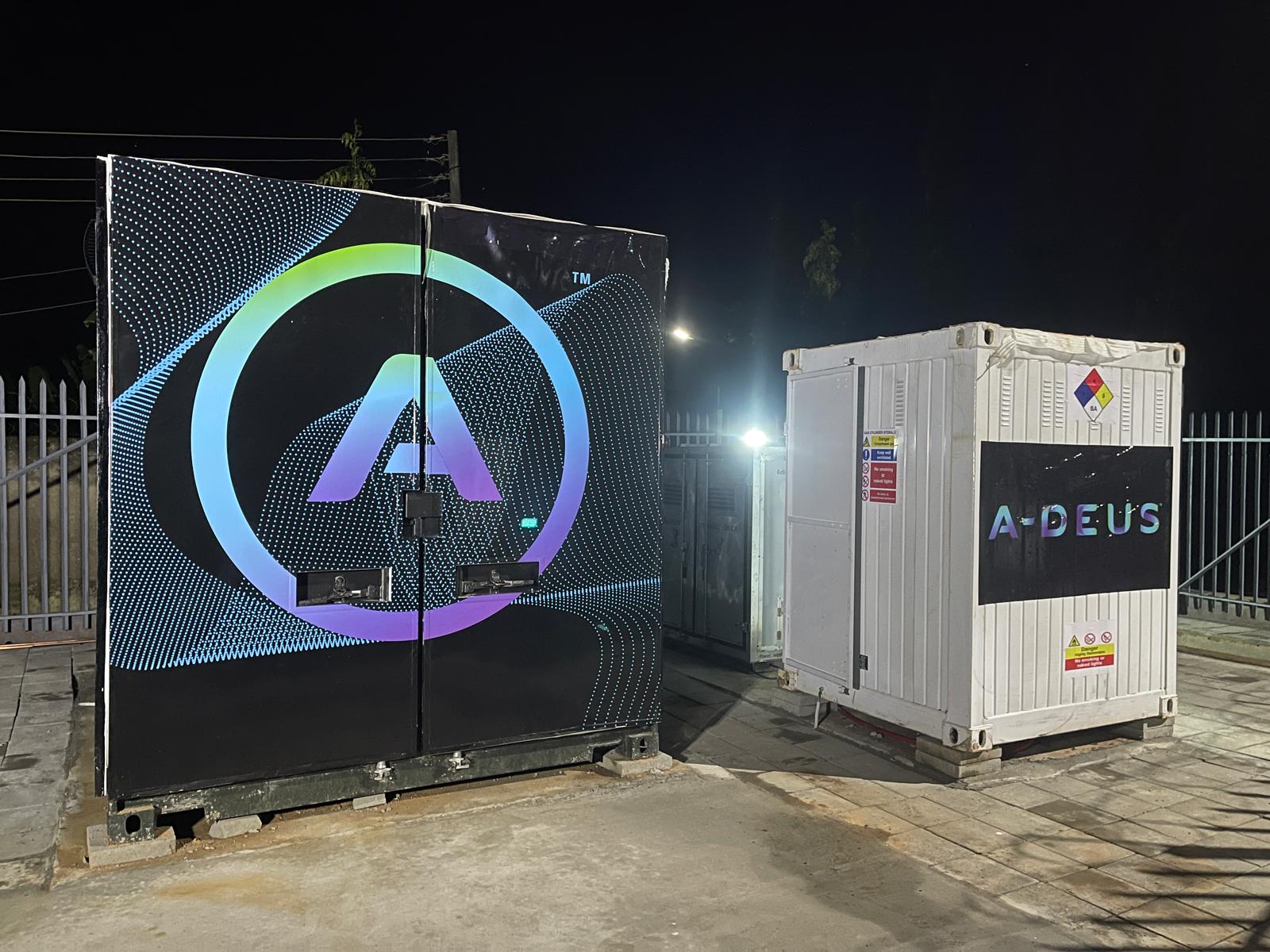
Bwari, Abuja: commercial proof that Power Angel is operating in the real world.
Following a successful 90-day proof-of-concept evaluation, the Abuja showcase site validates Power Angel as an inspectable, commercial fuel-cell power platform for reliable 24-hour electricity in Nigerian operating conditions.
A successful evaluation moved the solution from demonstration into commercial launch.
Reliability performance aimed at businesses that cannot afford interruption.
Measured site efficiency reinforces the advantage of SOFC power over combustion-led generation.
Lower cost compared with the previous diesel power solution.
Lower-carbon electricity without sacrificing dependable 24-hour power supply.
A commercial fuel-cell operation milestone for distributed power in the region.
Cheaper 24-hour power at scale
The launch validated the case that fuel-cell electricity can be delivered cheaper than comparable renewable options for reliable 24-hour supply.
Pathway to Nigerian manufacturing
The showcase is a bridge to local assembly, manufacturing and distributed electricity service capacity in Nigeria.
Affordable low-carbon electricity
Power Angel turns energy service into a cleaner, quieter and commercially accountable alternative to diesel-led self-generation.
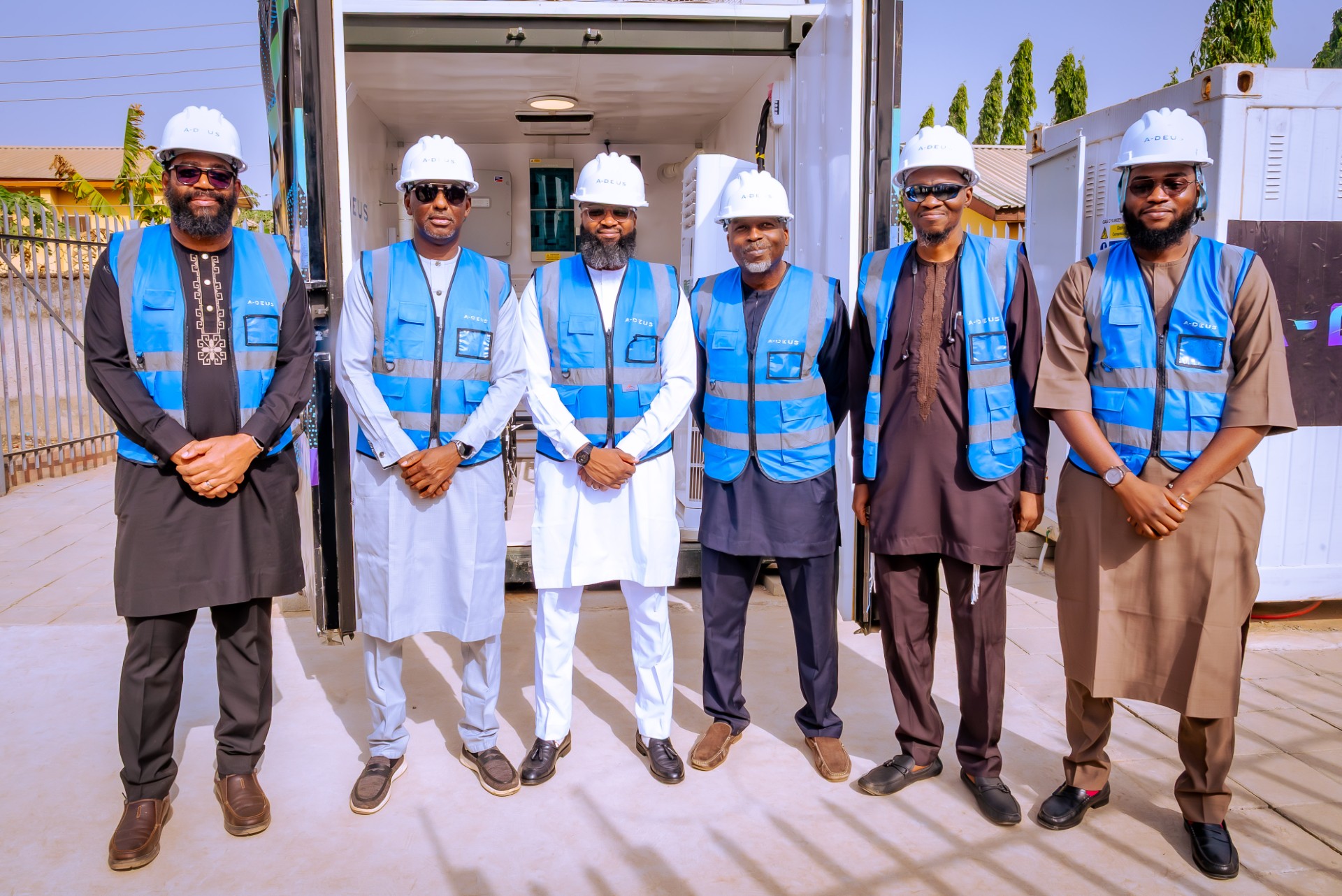
Launch validated by national innovation leadership.
At the commercial launch in Bwari, Abuja, A-DEUS hosted the Executive Vice Chairman and CEO of NASENI, reflecting the site’s strategic role in commercialising Nigerian clean-power infrastructure.
From proof of concept to commercial showcase.
The launch followed a successful 90-day proof-of-concept evaluation, demonstrating that Power Angel can move beyond pilots into accountable, inspected commercial operation.
A platform for technology transfer and local scale-up.
The showcase is positioned as a critical step toward a Nigerian manufacturing and assembly pathway for Solid Oxide Fuel Cell power systems and distributed electricity service.


Research-informed positioning
Built for the gap between grid availability and business expectations.
Nigeria’s power-reliability challenge has pushed businesses toward expensive, noisy and emissions-heavy self-generation. A-DEUS positions Power Angel as a managed alternative: continuous baseload power, battery support, low-noise SOFC technology and transparent service delivery.
Turn power from a risk into a managed service.
Start with a site assessment: load profile, gas availability, footprint, commercial model and service-level requirements.
Request a Power Angel assessment